Wednesday, April 7, 2010

Sh'mini

There is a well-known narrative in this parasha that describes the death of two of Aharon's sons - Nadav and Avihu.  According to the text (chapter 10, verses 1-4) the following happened (translation according to Everett Fox):
Now Aharon's sons, Nadav and Avihu, took each-one his pan, and, placing fire in them, put smoking-incense on it.   And brought-near, before the presence of Adonai, outside fire, such as He had not commanded them.  And fire went out from the presence of Adonai and consumed them, so that they died, before the presence of Adonai.  Moshe said to Aharon:  It is what Adonai spoke about, saying:  Through those permitted near to me I will be proven holy.  Before all the people I will be accorded honor!
Aharon was silent.
What do commentaries and commentators say about this event?
Role Models for Leadership discusses some classical understandings of this strange event, along with a modern message.
Alcoholism and the Nation Priests builds on verse 9, in which Aharon is instructed not to drink before entering the Tabernacle.  Is this the real reason his sons were killed?

Some questions to consider:

  • Is it always possible to find meaning in events?
  • Do we always remember things accurately?
  • How does our view of the world affect the way we tell our story?
Here are some interesting articles about the way we understand history.  You may want to read them and think about the possible relationship to the way in which we understand Torah.

  • A Closer Reading of Roman Vishniac appeared in the NY Times, and suggests that the way in which this famous photographer portrayed pre-Shoah Jewish life in Eastern Europe may not be as complete as we might have thought.
  • Thine is the Kingdom may seem a strange choice for an article in a blog about Jewish education and thinking.  I suggest you read it, however, because it seems to me to address the same fundamental issue that James Kugel struggles with in his book How to Read the Bible - is it possible to reconcile theological understanding of religious text with scientific and historical reality (whatever that is in the shifting sands of knowledge!)?  And, more important, does it matter?
  • Finally, please read China's Ancient Jewish Enclave.  Though not exactly parallel to the others, it does ask the reader to consider how a group understands its history and connection to community. It also made me wonder what the "tipping point" is between 'being Jewish' and 'being of Jewish descent'.  


Monday, March 22, 2010

Tsav

Imagine you are a young child just beginning the study of Torah.
Now imagine that you are studying in a school in which VaYikrah is the first book you are studying, as it is in the most traditional Jewish educational systems.
The sixth, seventh and eighth chapters of VaYikrah make up this week's parasha.
Chapter 6, at least for the first 16 verses, describes an offering to God made from grain.
So far, pretty bland.  Not gory at all.  I think of it as a sort of holy noodle kugel.
The rest of chapter 6, and continuing with 7 and 8 is a little more vivid - animal fat, blood, body parts, more blood - not what I would choose as a starting point for entering into the study of Torah.

Here's how one person expresses the ideas in this parasha:
Command, a poem based on chapter 6 verse 6

Akhlah is described as The Jewish Children's Learning Network.
Here is their summary of Tzav.
What meaning would your students find in this summary?


And here is TorahTots with their explanation of Tzav.
I'm pretty sure this would not speak to my students.


Here's the challenge: How can you make this parasha important to your students? How about this?


From URJ, Ten Minutes of Torah

A song from Matisyahu, the frum reggae singer:
And here are the lyrics

Or maybe you just want to gloss over this parasha briefly and concentrate on Pesach, which begins a week from tonight!


Monday, March 15, 2010

History is How We Write It

A few weeks ago there was a lengthy article in the New York Time Sunday Magazine about the Texas Board of Education and its influence on textbook publishers.  The debates and hearings are now over, and the new Texas standards are now in place.
Publishers will now respond to the new standards by publishing textbooks that align to them - Texas is a huge market and the publishers need to sell their books.

I hope this will encourage educators to seek sources for their students that reflect appropriate perspectives, even if those are not reflected in the available textbooks.  That is one of the advantages (and yes, challenges as well) of the enormous amount and diversity of information available to us today.  Please click on this blog from the ASCD Smartbrief about learning in today's world.  What is true about students in the general educational world is true in the Jewish educational world as well.

And to remember that - as I wrote on February 24, 2010 in a post about Purim -the lens through which we understand history is even more important than the accumulated facts that we have about it.

VaYikrah

Big Ideas:

  • Different sections of Torah focus on totally different concepts and ideas
  • It can be challenging to make personal meaning for ourselves from sections of Torah which appear to be archaic and irrelevant
  • All the diverse ideas in Torah can lead to important ideas for the reader
Essential Questions:
  • How can the discussion of animal and grain sacrifices be important today when Jews no longer bring sacrifices?
  • Why did the rabbis want all Jews to read about something that only a small group (the Cohanim) ever did?
  • Should there be consequences for improper acts if they are done accidentally?  Explain your thoughts 
  • What happens to a people when their situation changes radically altered by circumstances beyond their control?
Learning Activities:
  • This commentary connects parshat VaYikrah with the upcoming holiday of Pesach in an interesting way.  It can offer a way to relate to what might seem archaic on its face
  • American Jewish World Service invites us to consider why we should continue to read about things that we no longer do in this commentary by Evan Wolkenstein
  • Shoshana Glatzer, my valued friend and even more valued teacher, wrote the following about this parasha.  It includes an explanation of the sacrifices, as well as a reference to the meaning of the Hebrew word het.  How does understanding the word affect the way you understand wrongdoing?
Assessment/Reflection:

The book Name of the Rose, by Umberto Eco, is a historical novel set in the first half of the 14th century.  It describes an Italian monastery in which there is a huge library of scrolls containing the collected wisdom not only of the Church, but also from Greek, Arabic and other cultural sources.   This library is open only to the official librarian and a few hand-picked helpers - scribes whose job it is to copy the texts and preserve them.  No one else is permitted access.  The purpose of the library is to preserve the knowledge within its walls, not to share it.
In the Druze religion, an offshoot of Islam, only the priests have deep knowledge of the religious texts, as stated on their website:
Ordinary members, Jahill (singular) and Juhaall (plural), do not normally have access to religious texts. They attend only the first part of their religious meetings. The remainder of the meetings are reserved for the Sheiks. There is no actual prohibition of the reading of religious books. It is just that if a person becomes educated in the truth of God and of life and yet do not follow the duties arising from these truths, then their judgment would be worse that if they had remained uneducated.
The Torah and other Jewish writings are open to all who wish to study them, and all Jews are encouraged to become personally involved in such study.

What does this mean to you?

Please read and follow my new blog, addressed directly to students about the Big Ideas in Torah.  It is found at http://parshakids.blogspot.com
It provides an opportunity for upper elementary and middle school learners to respond directly to thoughtful questions about each week's parasha, and to create valuable, collaborative meaning

Tuesday, March 9, 2010

VaYakhel and P'kuday

Please take a look at a new blog just begun this week.
You can find it at http://parshakids.blogspot.com/
Its target audience is kids in 5th through 8th grades who are interested in what their peers are thinking about parshat hashavuah.

Big Ideas:
  • Studying Torah can create a Jewish lens through which to see the world
  • Every parasha has important ideas that learners can integrate into their worldview
  • One can apply critical thinking skills to study of Torah
  • Sharing ideas is a wonderful way to build understanding
Essential Questions:
  • How are the ideas in this parasha meaningful to you?
  • How do these ideas relate to your life?
  • In what way does using a Jewish lens impact the way you understand the world around you and interact with it?
Learning Activities:

  • There will be one or two statements of ideas from the parasha articulated on the blog
  • Participants will be invited to read the post, discuss the ideas with a friend or in class (optional), and post their own thoughts in the comments section of the blog.
  • Learners can read the thoughts of others and react to them by posting comments
Assessment:
  • Participation on a regular basis will be a marker of engagement
  • Teachers will read the posts and comments and may use them in class discussions
I encourage you to try this out with your students if they are in the appropriate grades.  I will be reading the comments before posting them publicly to avoid inappropriate language.  

Monday, March 1, 2010

Why I chose Jewish Education as a career

Recently I was waiting for a plane and happened to be sitting with someone who, it turns out, holds a pretty high position in a government educational agency.  In the course of conversation I half-jokingly suggested that she use her influence to limit the number of high-stakes tests students are obligated to take.  Her answer, more or less was this:  'You know, don't you, that educators aren't running the system these days - business people are.'

Here are two articles you may enjoy reading:

  1. Business principles won't work for school reform, former supporter Ravitch says - This article has received a great deal of attention, for good reasons
  2. Where the Bar Ought to Be is an op-ed by Bob Herbert in which he describes Deborah Kenny, creator of charter schools in Harlem.  I am not necessarily a fan of charter schools, but I agree wholeheartedly with this statement she made:
I had five core things in mind for my kids, and that’s what I want for our students,” she said. “I wanted them to be wholesome in character. I wanted them to be compassionate and to see life as a responsibility to give something to the world. I wanted them to have a sophisticated intellect. I wanted them to be avid readers, the kind of person who always has trouble putting a book down. And I raised them to be independent thinkers, to lead reflective and meaningful lives.”
In most settings of Jewish learning we are not bound by the strictures of the general educational world.  We can set our own priorities.

  • What are the five core things you have in mind as what you want for your students?
  • Does the constituency (clergy, teachers, parents, kids) in your school share your core ideas?
  • What are you doing to support these ideas?
    • How does the curriculum in your school align to these ideas?
    • How does the structure of your school further them?
    • How does the staff nurture their development?
    • How are those other than students involved in supporting these ideas?
    • How can everyone involved do a better job?

Ki Tissa

Big Idea:

  • Some phrases from the Torah have become well-known, even to people who don't know their origin
Important Questions:
  • What words and phrases stand out for you when reading this parasha?  (i.e. 31:16-17; 32:9; 33:3; 33:5; 33:19; 34:6-7; 34:9; 34:20)
  • Why do you think you know these words and phrases?
Learning Activities:
  • Listen to this rendition of Adonai, Adonai, El rachum v'chanun and read the English translation of the words.  Why do you think this is part of the Yom Kippur service?
  • Why, in your opinion, are these same words part of a traditional Bat Mitzvah observance in the Italian tradition?
  • Read this article about Selichot in Jerusalem.  How does it relate to what we have been learning about?
  • How does a teen understand this parasha?  Here is a d'var Torah from a young person
  • What does it mean to "make Shabbat?"  Here is a short article you may want to read, from the Chief Rabbi Emeritus of the Great Synagogue in Sidney, Australia
  • I had never heard of David Kronemyer, and may never again, but in his blog he asks some interesting questions about the idea of Jews being am k'she oref - a stiff-necked people.
...exactly when did God find out the Jews were stiff-necked? Did he know it before the Golden Calf incident, or is he attributing this characteristic to them on the basis of the Golden Calf incident? While the text is unclear on this point, I think God’s use of the term “behold” at 32:9 means he just now is finding out. This raises the question, though, of whether God would have made the Jews his Chosen People, if he had known they were stiff-necked, before designating them as such.
What do you think?


Assessment:

  • Which of the ideas you studied in this parasha is most meaningful to you personally?  Be prepared to support your choice in a discussion
  • Create a visual representation of one of the segments in this week's parasha that expresses your feelings about it.
  • Write a short reflection of your reaction to this week's parasha

Wednesday, February 24, 2010

Purim - Did It Happen?

The question is raised about the story of Purim, and also about every story we tell our students:  "Is it true?  Did it really happen?"
Recently I read an interesting book:  A Voyage Long and Strange, by Tony Horwitz.  Horwitz (who happens to be married to Geraldine Brooks, the author of People of the Book, a wonderful historical novel about the Sarajevo Haggadah) took it upon himself to investigate European settlements in the Americas before the arrival of the Pilgrims at Plymouth Rock in 1620.
What he discovered contradicted much of what he remembered learning as a child.  In fact, at the end of his travels he came to believe that much of what we learn about early American history is not accurate.  And still most of us celebrate Thanksgiving the way we always did, ignoring the inconsistencies.

I believe that his conclusions are pertinent as well to how we understand our own history as Jews, and our Jewish texts.
Here is what he says at the end of his book:

Myth is more important than history.  History is arbitrary, a collection of facts.  Myth we choose, we create, we perpetuate.
The story here may not be correct, but it transcends truth.  It's like religion - beyond facts.  Myth trumps fact, always does, always has, always will.
Perhaps that is why the Texas Board of Education is working so hard to influence the social studies textbooks that are published in that state and used all over the country, as described in this article in the NY Times Magazine on February 14:  How Christian were the Founders?
As Frances FitzGerald showed in her groundbreaking 1979 book “America Revised,” if there is one thing to be said about American-history textbooks through the ages it is that the narrative of the past is consistently reshaped by present-day forces. Maybe the most striking thing about current history textbooks is that they have lost a controlling narrative. America is no longer portrayed as one thing, one people, but rather a hodgepodge of issues and minorities, forces and struggles. If it were possible to cast the concerns of the Christian conservatives into secular terms, it might be said that they find this lack of a through line and purpose to be disturbing and dangerous.
 I think these two issues are related, in the following ways:

  • How we tell a story determines its meaning
  • Deciding how to tell a story tells more about the teller than about the actual story
  • As educators we need to think carefully about how we construct stories - considering how they affect the listeners
  • What we learn from a story may or may not reflect historical accuracy, but it certainly will reflect and create attitudes in powerful ways.

Purim Today

There are those who believe the story related in Megillat Esther happened as described.
Others believe the story is fantasy.
I think it doesn't really matter who is right.
According to The Jewish Study Bible
...The setting of the Persian court is authentic, but the events are fictional. 
It goes on to say
The book does have a serious side, and an important function as a Diaspora story, a story written about and for (and perhaps by) Jews of the Diaspora.  As such, it promotes Jewish identity, solidarity within the Jewish community, and a strong connection with Jewish (biblical) tradition.
... 
It addresses the inherent problems of a minority people, their vulnerability to political forces and government edicts, their lack of autonomy, and their dependence on royal favor and on the sagacity of their own leaders.
... 
The book succeeds in putting a serious message in a comic form. 
So what might that mean for our students?

Big Ideas: 

  • As Jews we are part of a group with at least some shared experiences
  • As members of a group we have responsibilities to the other members of the group
  • Appearances do not always reflect reality
Important Questions to Ask and Answer:
  • What groups are you part of?
  • What threats exist to those groups?
  • What are our responsibilities toward the other members of these groups?
Learning Activities:
  • Reading Megillat Esther in language the learners can understand should be a core part of the learning activities
  • Brainstorm the different groups students are part of and the threats facing each.  Threats can be physical, but need not be.  For example, disappearance of the group can be a threat.
  • Discuss ways to address these threats (or challenges, if you prefer)
Assessment:
  • Prepare an action plan to address challenges that have been identified

NOTE:  Linking to popular culture is a wonderful way to engage learners
  • In the movie Avatar, what group(s) does Jake belong to?
  • Which of these groups is threatened?
  • How does Jake decide which group to support?
  • How was his choice personally threatening?
  • Compare and contrast Jake (in Avatar) and Esther (in the Purim story)
  • What Jewish values are expressed in the movie?


Monday, February 22, 2010

Tetzaveh


Big Ideas:

  • How we perceive people is often affected by their appearance.
  • Certain peoples' behavior may honor or dishonor the group they belong to.

Important Questions:

  • How do you decide when to wear certain clothes?
  • When you see someone 'dressed up' what do you think?
  • Why do you think people wear uniforms?
  • What responsibilities do public figures have to their 'public'?

Learning Activities:

  • Watch this video about the uniforms worn at the Olympics in Vancouver - 
  •  G-dcast posted a video last year about this parasha that explained the uniform of the High Priest in an interesting way
  • Aish.com has an article which explains why, when, and which head coverings are traditionally worn by Jews 
Assessment:
  • Do you think a person wearing a certain uniform has an obligation to behave in a particular way?  Explain why or why not.
  • In what way do the actions of a person dressed in a way that identifies him or her as a member of a certain group (e.g. Catholic priest, soldier in uniform, Jew wearing a kippah) reflect on the group?  Is this fair?  Explain why or why not.
  • Public figures often behave in ways that bring criticism not only on themselves but on the institutions and individuals they represent (e.g. politicians, athletes, religious leaders).  Choose two people you believe fall in this category and recommend what you think they should do.
NOTE:  Take a look at the other post that refers to Tetzaveh by clicking on that label in the list of labels 

Monday, February 15, 2010

Terumah

Last week - lots and lots of laws about any number of things, most of which were instructions for interpersonal behavior - what are called in Hebrew mitzvot bein adam l'chavero - how to treat your friends, your slaves, your enemies, your animals.
And this week what seems to me a huge change of direction.

Big Ideas:

  • Some important things have to be done voluntarily
  • Some of our ideas about God may have changed over time

Questions:
  • What is this parasha about?
  • How do you think it relates to last week's parasha?
  • What seems to you important in this week's parasha?
  • How are the builders to assemble the materials they need to build the mishkan?
  • For whom are the instructions in this week's parasha intended?
  • What ideas about the way we live today do you think can be learned from this parasha?
Learning Activities:
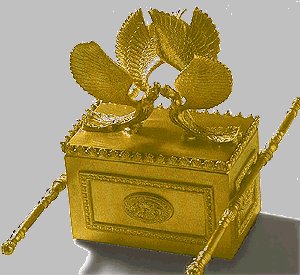
"And there I will meet with you, and I will speak with you from above the cover of the ark, from between the two k'ruvim which are on the ark of witness, of all the things which I will command you - the children of Israel."

  1. What is the reason according to the text?
  2. How does this compare with what you believe about God?

    • Look around your own synagogue.  Compare and contrast your synagogue with the description of the mishkan that you have read about in this parasha
    Assessment:
    •  Last week's parasha was called "Mishpatim", which means Laws.  This week's parasha is called "Terumah", a kind of offering to be set aside, in this case, voluntarily.  Explain why you think the laws given last week are obligatory, while the offering described this week is voluntary.
    • Why do you think the rabbi in this commentary says this parasha is a favorite of rabbis in the middle of a capital campaign (a fundraising effort concentrating on improving the synagogue building)?  If you were such a rabbi, how would you use this text in planning a sermon for your congregation?

    Monday, February 8, 2010

    Mishpatim

    Just a few questions to get you started thinking about this week's parasha:
    • What is familiar in this week's Torah reading?
    • What is disturbing in this week's reading?
    • What do you find meaningful in your own life about this reading?
    • What do you think about the relationship between this week's parasha and last week's?
    • If you were forced to choose, which do you think is the most important law in this list of laws for humanity in general?  For the Jewish people in particular?  Explain your answers.
    • Create a "top ten" list of laws in this parasha, as if you were writing for Dave Letterman.  Explain your choices
    • Create a "bottom ten" list - explain your choices
    • Choose one of the commentaries from those here at My Jewish Learning that you find particularly relevant and bring it to the table for discussion with your group.

    Clothes Make the Man?

    A blogpost at the Lede Blog, at the NY Times, is entitled "An 'Israeli Remix' of a Palestinian Scarf".  It is the story of the creation and marketing of a keffiyeh, traditionally worn by Arab men, with Jewish and Israeli motifs.  It started me thinking about the role of clothing in expression of identity.

    Big Idea:
    • People choose their clothing for many different reasons
    • First impressions of others are often based on appearance
    Questions You Will Want to Ask
    • How do you decide what to wear?
    • What is your response when you see someone wearing a keffiyeh?  Why?
    • What message do you expect your appearance to convey?
    • How does  your Jewish identity influence what you wear?
    Learning Activities:
    •  The Kohen Gadol wore very elaborate clothing as a symbol of his status and role in the community.  You can read about this clothing here in a commentary on Parshat Tetzaveh
    • An interesting article about Jewish clothing in the Middle Ages can be found here at My Jewish Learning
    • At Aish.com you can read a history of the kippah, including an explanation of the term 'yarmulke' that may be new to you.
    • Some Jewish clothing is really bizarre - 5 pages of Jewish dog clothes?
    • There is a holiday coming up on which costumes play a big part
    Assessment:
    • Keep a log in which you describe how what you choose to wear each day for a week expresses your identity
    • Keep a log in which you describe how something you choose to wear each day for a week expresses your Jewish identity.  How did it make you feel to do this?
    • Create a display of traditional Jewish clothing from different times and places in history
    • Make a video in which you explain items of Jewish ritual clothing (kippah, tzitzit, tallit or other) to someone unfamiliar with them
    • Design a Purim costume for yourself that expresses an aspect of your Jewish identity (you don't have to wear it, just design it!  In the U.S. it is common to wear costumes on Purim that reference Jewish heroes.  Not necessarily so in Israel.)
    • Describe your reaction to the blogpost on the 'Jewish' keffiyah. 
      • What do you think about it? 
      • Would you wear it? 
      • Do you think it is problematic to adopt another group's dress?
      • What is your thought about the reaction of others to this?

    Friday, February 5, 2010

    Haiti and Tzedakah

    No one can be unmoved by the tragic outcomes of the recent earthquake in Haiti.  There is no questioning the hardships that exist and continue to affect the inhabitants of this country.  During the past few weeks millions of dollars have been collected from people all over the world who feel they want to help fellow human beings who are in trouble.

    What guidance can we derive from Jewish wisdom?

    Big Ideas:
    • Tzedakah is an obligation.
    • There is Jewish thinking that can help us decide when to give, to whom to give, what to give, how to give.
    Essential Questions:
    • When should I give?
    • To whom should I give?
    • How much should I give?
    • What is my obligation to determine if the money I am giving is being put to good use?
    Learning Activities:  Choose as many as you feel you have time for.  Or, divide your learners into groups and let each group select the aspect it wants to investigate, sharing results with the rest of the class.  Be sure to include at least one site describing Jewish wisdom about tzedakah and either scambusters.com or CharityNavigator.org.
    Assessment:
    • Learners will make informed decisions about donating to disaster relief in Haiti
    • Learners will be able to explain how Jewish wisdom and thought guides decisions they make in their lives
    • Learners will use what they have learned in regard to Haiti to guide their tzedakah in other areas.
    Note:  There are legitimate differences among Jewish authorities as to one's responsibility for determining if someone who asks is honestly needy.  Some say you give first to whomever asks, and investigate later.  According to Rabbi Benjamin Yudin of Congregation Shomrei Torah, in Fairlawn, NJ, one gives first to whomever asks, since God is "rav hessed v'emet:, and the hessed of giving preceeds the emet of investigation (I heard this from a valued colleague, Emily Amie Witty, who shared the thoughts of her Rabbi with me as I was preparing this post).  Others say that one has the responsibility to be sure the tzedakah is going to a reliable cause.  In order to do this one should investigate the legitimacy of the recipient individual or group before giving. 
    You may want to have this discussion with your students, and perhaps invite a member of the clergy in your school to participate in the conversation.
    Part of our job as Jewish educators is to empower our students of all ages to make responsible decisions guided by Jewish thinking, and responding to the tragedy in Haiti can help us do just that.

    Monday, February 1, 2010

    Yitro

    Big Ideas:

    • A person's position often affects the way in which that person is perceived.
    • The way in which one understands the events at Sinai is fundamental to one's religious beliefs.
    • Mainstream Jewish thinkers understand Sinai differently.
    Some Questions:
    • In chapter 18, almost every verse has a reference to Yitro.  In each case Yitro is identified as "Hoten Moshe", Moshe's father-in-law.  Do you have any thoughts about why this label is repeated over and over?  Wouldn't it be enough to identify him by name after the first time?
    • How do you understand the event that occurred at Sinai?  What Jewish thinker shares your understanding?
    • How does your understanding of Sinai affect the way you are Jewish? 
    Learning Activities:
    • Read chapter 18 carefully.  How many times is Yitro referred to as "hoten Moshe"?  How do you understand this?
    • Find information that describes these Jewish thinkers' beliefs about revelation.
      • Joseph Soloveitchik
      • Abraham Joshua Heschel
      • Eugene Borowitz
      • Mordecai Kaplan
    Assessment:
    • Choose one of the people you learned about and prepare a presentation for the rest of the group explaining why this understanding of revelation is meaningful for you.
    • Create a chart that compares and contrasts the various ways in which Jews understand the events at Sinai
    • Find evidence in the popular culture of the world around you that a person's position affects the way in which he or she is heard and understood.  Who do we listen to?  Who do we ignore?